3 Things a Ticket Resale Guarantee Covers and What to Document

A ticket resale guarantee promises three things: the ticket you receive is valid, it arrives before the event, and if either of those fails, the marketplace gives you comparable replacement tickets or your money back. That promise kicks in for non-delivery, invalid tickets at the gate, and canceled events. It does not automatically cover a rescheduled show, buyer’s remorse, or expenses beyond the ticket price itself.
TL;DR:
Guarantees mainly cover valid tickets, on-time delivery, and comparable replacements, with clear procedures and deadlines for claims.
They do not protect against personal mistakes, venue disputes, travel costs, or promoter-driven cancellations, which are outside their scope.
Immediate documentation at the venue, such as photos and staff explanations, speeds up resolution if tickets are denied or the event is canceled or rescheduled.
Delivery method impacts claim speed; mobile transfers are faster and easier to dispute than shipped tickets, which depend on carrier timelines.
The guarantee is most valuable for high-stakes, out-of-town, or expensive tickets, while low-risk, low-value purchases may benefit more from early buying and flexible return policies.
Table of Contents
What Does a Ticket Resale Guarantee Cover?
Every major marketplace builds its guarantee around the same three pillars: authenticity, timing, and remedy. The wording differs by platform, but the substance tends to line up closely.
Authenticity means the barcode scans and the ticket matches what you ordered. StubHub’s FanProtect guarantee promises valid tickets, on-time delivery, and comparable replacement tickets or a refund when those promises break down. SeatGeek’s version works similarly. Its Buyer Guarantee covers delivery timing, ticket validity, and whether the seat matches your order, and the platform leans on replacement tickets first before moving to refunds.
“Comparable replacement” usually means equal or better: same price tier or higher, similar or better seating location, same event date. If a marketplace can’t source a comparable seat, a refund becomes the fallback. A full refund typically returns the ticket’s purchase price, and sometimes may include service fees depending on the platform’s policy.
Here’s what to look for when you’re reading a guarantee’s fine print before buying:
A named remedy (replacement, refund, or both), not vague language like “we’ll make it right”
A stated delivery deadline relative to event start
A documented claims process with a support contact or ticket number
Clear language about what counts as “invalid” (duplicate barcode, canceled seller listing, wrong event)
Marketplaces that spell out these details in plain terms are generally more reliable than ones that bury remedies in generic disclaimers.
What Doesn’t a Resale Guarantee Cover?
Guarantees protect against marketplace failures, not personal decisions or venue-side issues. Buyer’s remorse doesn’t qualify. If you bought the wrong date or the wrong section by mistake, that’s on you, and most platforms will say so directly in their terms.
Venue policies sit outside the guarantee too. If a venue denies entry over an ID mismatch, a bag policy violation, or a dress code, the marketplace isn’t responsible for that decision. Personal costs like flights, hotels, parking, or rideshare fares are almost never included. StubHub specifically notes that FanProtect covers tickets only, not the travel built around them.
A few other common gaps:
Certain tickets are flagged as ineligible for resale on some platforms, and Vivid Seats’ terms state plainly that all sales are final except as described in its Buyer Guarantee
Name-match or transfer restrictions on some venue-controlled tickets
Promoter-driven cancellations that only offer partial refunds under specific event terms
Force majeure situations, where remedies depend heavily on the fine print
How Do You File a Ticket Resale Guarantee Claim?
Timing matters more than almost anything else here. A denied entry at the gate needs same-day contact with support. Other issues, like a ticket that never arrived, usually have to be reported within the window the marketplace sets in its policy, so check that window before you need it.
Contact support immediately. Use the app or website chat rather than email if the event is starting soon.
Gather your evidence. Screenshots of the order confirmation, the delivery timestamp, seller messages, and any error screen at the gate all matter.
Submit the claim with that evidence attached. The more documentation you provide upfront, the fewer back and forth emails you’ll need.
Choose your remedy. Accept a replacement if it’s offered and it meets your standards, or ask for a refund if it doesn’t.
Escalate if needed. If the platform doesn’t respond within its stated window, ask for a supervisor or file a dispute with your payment provider.
Pro Tip: Save your support chat transcript or ticket number the moment you open a claim. If you need to escalate later, having that reference number on hand cuts resolution time dramatically.
Documenting a gate denial with photos and getting a written reason from staff measurably speeds up investigations, according to SeatGeek’s own guidance to buyers.
What Should You Do at the Venue If Your Ticket Is Denied?
The minutes right after a denial matter more than anything you do afterward. Act fast and document everything before you leave the gate.
Photograph the scanner screen showing the error message
Ask a staff member for a written or verbal explanation you can quote back to support
Call or chat with marketplace support from the venue, not later that night
Write down the support ticket ID or save the chat transcript before you lose signal or battery
Ask about will-call or guest-list alternatives some venues offer on the spot
A few minutes of documentation at the gate can be the difference between a fast refund and a drawn-out dispute later.
Canceled vs. Rescheduled Events: What’s the Difference?
Cancellations and reschedules trigger very different outcomes, and mixing them up leads to frustration. A canceled event usually means a refund, period. A rescheduled event usually means your existing ticket stays valid for the new date, with no refund owed unless you specifically can’t attend.
Canceled shows: Refunds are the default remedy, though timing and legal requirements vary by state and by platform.
Rescheduled shows: Tickets carry over automatically in most cases; refunds are discretionary unless the new date falls outside a reasonable window.
Credits vs. cash: Some platforms offer account credit as a faster alternative to a cash refund, but you can usually request cash instead if the credit doesn’t work for you.
When to push for a refund: If the new date conflicts with your schedule, say so early. Waiting until days before the rescheduled show weakens your position.
Delivery Method, Fees, and How They Affect Your Guarantee
How your ticket gets to you shapes how fast (and how easily) a guarantee claim resolves. Mobile transfers tend to fail loudly and immediately, which actually makes them easier to dispute. PDFs can duplicate if a seller isn’t careful. Shipped physical tickets carry the slowest resolution path since carrier delays complicate the timeline.
Mobile transfer issues (wrong account, failed transfer) usually resolve within the marketplace’s own app support
Refunds typically include the ticket price; shipping fees are refunded less consistently, so check the policy before assuming
“Seat Saver” or pre-sell listings mean the seller commits to obtaining the tickets after your purchase, and Vivid Seats confirms these are still covered under its Buyer Guarantee, though split orders and special rules can apply
Before buying, verify the delivery deadline, the transfer method listed, and whether the seller has a verified track record on the platform
Practical Ways to Avoid Needing a Guarantee at All
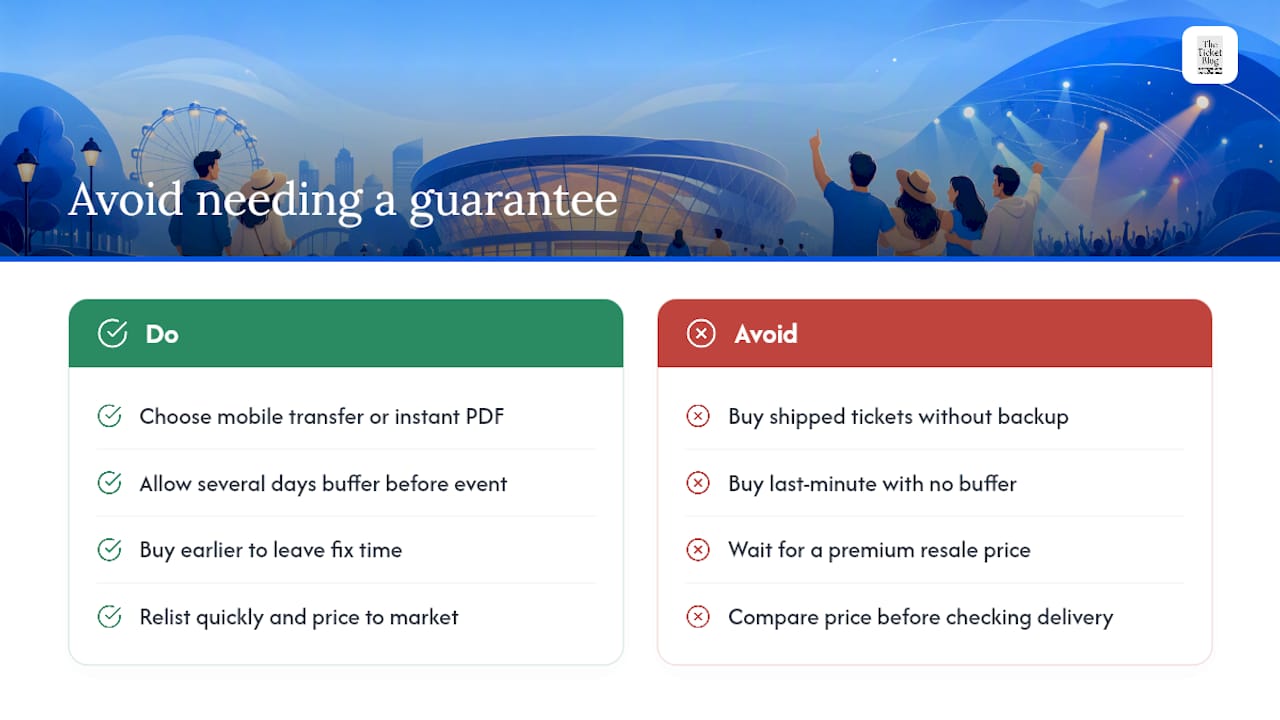
The best claim is the one you never have to file. Favor listings with mobile transfer or instant PDF delivery over shipped tickets, and give yourself a buffer of at least a few days before the event so a delivery hiccup doesn’t turn into a crisis.
Buying earlier, generally, lowers your risk. Last-minute purchases aren’t reckless, but they leave no room to fix a problem if one shows up. If you’re traveling for a show, book refundable flights and hotels where you can, or consider short-term travel insurance for high-value trips. The Summer Concert Ticket Buying Checklist walks through pre-purchase verification steps that catch most red flags before you pay.
If your plans change, relist unwanted tickets promptly and price them close to market rate rather than holding out for a premium. Faster listings sell faster.
Pro Tip: Check a listing’s delivery method before comparing price. A slightly cheaper ticket with a two-day shipping window is a worse deal than a pricier one with instant mobile transfer, once you factor in risk.
When Does a Resale Guarantee Actually Matter?
A guarantee earns its keep when the stakes are high: out-of-town trips, high-dollar seats, or events you can’t easily reschedule around. If price is genuinely your only concern and the ticket is low-stakes, a primary-market option or a refundable booking might serve you better than chasing the cheapest resale listing. Smart timing with guarantee-backed marketplaces helps when the downside of a bad ticket outweighs the savings of skipping one.
— The Ticket Blog
Find Smarter Ways to Buy Resale Tickets
This resource helps you shop marketplaces smarter, with breakdowns of guarantee terms, timing strategies, and where the real savings hide on secondary platforms.

If you want a deeper dive before your next purchase, The Ultimate Guide to Secondary Ticket Markets breaks down pricing patterns and guarantee language across platforms in plain terms. Planning around a sold-out show? The Sold Out Game Ticket Alternatives guide covers safer paths back into the secondary market. Head to The Ticket Blog to sign up for deal alerts and promo codes so your next purchase starts with a discount, not just a guarantee.
Sources
Claims about buyer protections draw from StubHub’s FanProtect Guarantee, SeatGeek’s Buyer Guarantee support pages, and Vivid Seats’ Terms of Use. Event-status documentation guidance references FCC public files as an example of an authoritative public record.
FAQ
Does Ticketmaster Have a Guarantee for Resale Tickets?
Ticketmaster’s resale marketplace includes buyer protections similar to other platforms, covering valid tickets and on-time delivery, with replacement or refund as remedies. Specific terms and exclusions live in Ticketmaster’s own purchase policy, which buyers should review before completing a resale order.
What Happens if No One Buys My Resale Tickets?
If your listing doesn’t sell, most marketplaces let you relower the price, extend the listing, or pull it down entirely without penalty. Pricing closer to market value and listing earlier both improve your odds of a sale before the event date.
Can I Get a Refund on Resale Tickets?
Refunds are available when a ticket resale guarantee’s core promises fail. Delivery, validity, or a canceled event. SeatGeek, for example, issues a full refund if a buyer declines an offered replacement. Refunds generally do not apply to buyer’s remorse or rescheduled events where the ticket remains valid.
What Happens if You Can’t Resell Your Tickets?
Some tickets carry resale restrictions built into the original sale, meaning they’re ineligible for listing on secondary marketplaces at all. Check the ticket’s transfer terms before assuming you can relist it, since platform rules on eligibility vary and some venue-issued tickets can’t be resold regardless of the marketplace.
Recommended


Comments