What Does Ticket Transfer Mean? A Clear 2026 Guide


Ticket transfer is defined as the official, digital reassignment of ticket ownership from one verified account holder to another within an authorized ticketing platform. The original ticket is deactivated and replaced with a new, unique ticket issued directly to the recipient’s account. This process is typically free, completed in minutes, and maintains the event organizer’s verified attendance records. Understanding what ticket transfer means protects you from fraud, keeps your entry valid, and helps you avoid costly mistakes when plans change.
What does ticket transfer mean in practice?
Ticket transfer is the industry’s standard term for a peer-to-peer ownership change handled entirely inside a primary ticketing platform. No money changes hands, no paper ticket gets mailed, and no screenshot gets shared. The platform deactivates the sender’s barcode or QR code and generates a fresh one for the recipient. This is what separates an official transfer from informal sharing methods, which carry real entry risk.
The core purpose is security. Event organizers rely on verified attendance records to manage capacity, comply with venue regulations, and prevent scalping. An official transfer keeps those records accurate. It also means venue staff scan a live, valid barcode at the door rather than a static image that could have been copied and shared dozens of times.

The Ticket Blog covers the full range of ticketing platform types and their transfer features, which vary more than most buyers realize before they need to use them.
How does the ticket transfer process work step by step?
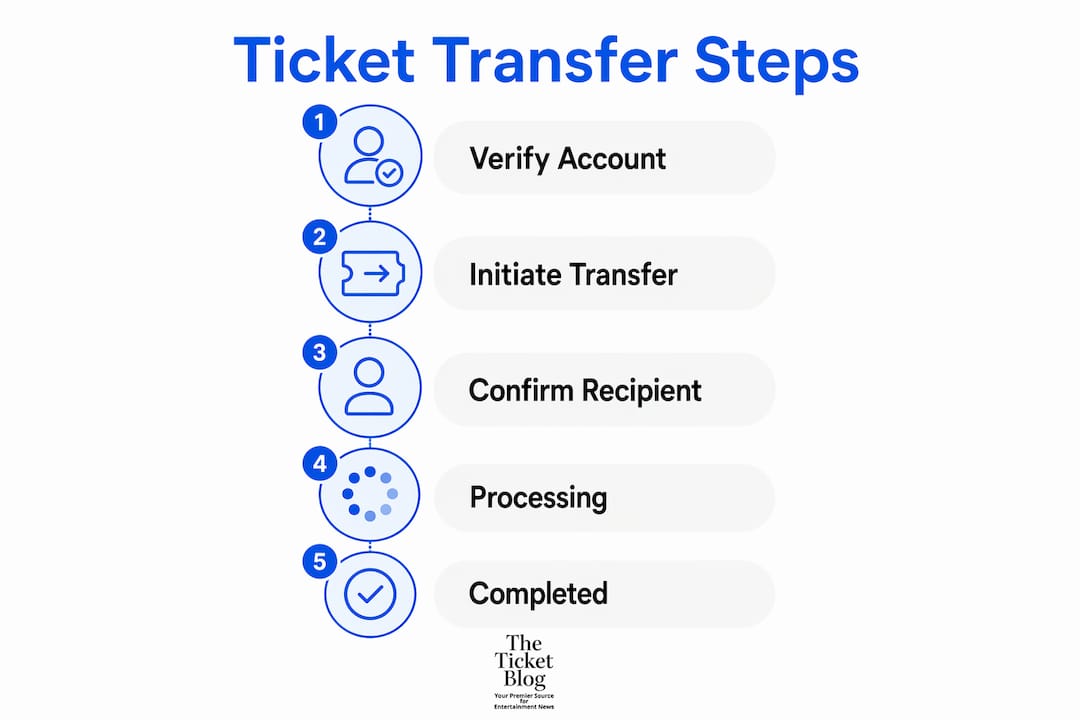
The transfer process follows a consistent sequence across major platforms, though the exact interface differs. Here is how it works:
Log in to your account on the ticketing platform where you purchased the tickets.
Select the tickets you want to transfer from your order history or “My Tickets” section.
Enter the recipient’s email address linked to their verified account on the same platform.
Confirm the transfer. The platform deactivates your original ticket and sends a transfer invitation to the recipient.
Recipient accepts the transfer. They log in, find the pending transfer, and claim the ticket to their account.
New ticket is issued. The recipient receives a fresh barcode or QR code, and your copy is permanently voided.
Transfer processes on major platforms typically complete within 5 to 10 minutes after the sender initiates the request. That speed matters when you are sorting out last-minute plans before an event.
The recipient must have a verified account on the same platform. Without one, the transfer cannot complete. Both parties should confirm their account status before starting the process.
Pro Tip: Double-check the recipient’s email address before confirming. A mismatched or incorrect email is the most common reason transfers fail, and recovering a lost transfer can take days.
What are common ticket transfer policies and restrictions?
Ticket transfer policies vary significantly by event, organizer, and platform. Knowing the rules before you transfer protects both sender and recipient.
Key restrictions to check before transferring:
Transfer deadlines. Organizers set cutoff times for when transfers must be accepted. For the FIFA World Cup 2026, for example, transfers must be accepted up to one hour before kick-off, or the ticket reverts to the original holder. Missing this window means the recipient cannot get in.
Verified accounts required. Both the sender and the recipient must hold verified accounts on the platform. Unverified accounts block the process entirely.
Non-transferable tickets. Non-transferable tickets are increasingly common for high-demand events as organizers fight scalping and unauthorized resale. Always check transferability status before you buy if you think plans might change.
Transfer limits. Many platforms cap how many times a single ticket can be transferred. This prevents chains of transfers that obscure the original purchase and complicate fraud investigations.
Insurance implications. Ticket protection insurance is often tied to the original purchaser’s account. Once you transfer a ticket, that coverage may become void. The recipient does not automatically inherit any protections you purchased.
ID-linked tickets. Some high-security events require the attendee’s ID to match the ticket account holder’s name. In those cases, ID verification requirements can reduce the practical benefit of a transfer, even when the platform technically allows it.
Reading the ticket transfer policy for your specific event before initiating a transfer saves significant frustration. Policies are usually listed in the event’s FAQ or your order confirmation email.
Why does official digital ticket transfer matter for fraud prevention?
Official ticket transfers prevent fraud by invalidating the original QR code or barcode the moment a transfer is initiated. Only one valid ticket exists at any time. This is the critical difference between an official transfer and sharing a screenshot or photo of a ticket.
Screenshot and paper ticket sharing are frequently rejected at venue entry. A static image can be copied and sent to multiple people, meaning several buyers might show up holding what looks like the same valid ticket. Venue staff scan barcodes in real time, and only the first scan succeeds. Everyone else is turned away.
Official transfers also maintain the organizer’s record of who is actually attending. This matters for safety compliance, post-event communication, and accountability at large venues. When you use the platform’s built-in transfer feature, the organizer always knows who holds the valid ticket.
Pro Tip: Avoid third-party platforms without integrated transfer features. Sharing a static QR code through messaging apps or email creates real entry risk, especially at high-security venues where staff are trained to spot duplicate scans.
For buyers navigating the secondary market, understanding how official transfers work also helps you spot fraudulent listings. A seller offering a screenshot instead of a platform transfer is a clear warning sign. The Ticket Blog’s guide to secondary ticket markets covers these red flags in detail.
How does ticket transfer differ from ticket resale?
Ticket transfer and ticket resale are two distinct processes, and confusing them can lead to policy violations or unexpected fees. The table below shows the key differences:
Feature | Ticket transfer | Ticket resale |
Payment exchanged | No | Yes |
Platform fees | None | Typically applies |
Where it happens | Primary platform only | Secondary marketplaces |
Relationship | Peer-to-peer gift or handoff | Buyer and seller transaction |
Speed | 5–10 minutes | Days to weeks for payment |
Policy risk | Low if done correctly | Higher; may violate event rules |
Ticket transfer simply reassigns ownership. You give your ticket to someone else at no cost through the original platform. Resale involves listing a ticket for sale on a secondary marketplace, setting a price, and completing a financial transaction. Resale may involve service fees, seller fees, and delayed payment processing.
The distinction matters for policy compliance. Some events prohibit resale above face value or ban secondary market listings entirely. Transferring a ticket to a friend or family member through the official platform typically falls outside those restrictions. Listing the same ticket for profit on a secondary marketplace may not.
Understanding which option fits your situation helps you avoid voiding your ticket or violating the event’s terms of service. The Ticket Blog’s breakdown of private sales in ticketing explains where the legal and ethical lines sit.
Key Takeaways
Ticket transfer is the safest, fastest way to reassign event ticket ownership, and using the official platform process protects both the sender and the recipient from fraud and entry failure.
Point | Details |
Official transfer deactivates original ticket | The sender’s barcode is voided instantly, preventing duplicate entry attempts. |
Transfers complete in minutes | Most major platforms finalize transfers within 5–10 minutes of sender initiation. |
Deadlines are strict | Some events require transfer acceptance up to 1 hour before start or the ticket reverts. |
Insurance may not transfer | Ticket protection policies are often tied to the original buyer and void after transfer. |
Transfer is not the same as resale | Transfers are free and peer-to-peer; resale involves fees and a financial transaction. |
The Ticket Blog’s take on transferring tickets the right way
The single biggest mistake buyers make with ticket transfers is treating them as an afterthought. You buy tickets months in advance, life changes, and suddenly you are scrambling to send tickets to someone else two hours before doors open. At that point, a missed deadline or a typo in an email address becomes a real problem.
The email address issue is more common than it should be. People assume their friend uses the same email for everything. They do not. Always ask for the exact email linked to the recipient’s ticketing account, not their general inbox. One wrong character and the transfer goes nowhere.
The insurance point is one most buyers never consider until it is too late. If you bought ticket protection and then transfer the ticket, that coverage is almost certainly gone. The recipient has no protection either. If the event is high-value and plans are uncertain, think carefully before transferring rather than keeping the ticket and sorting out attendance another way.
The Ticket Blog’s consistent advice is to use the official platform transfer feature every single time. Third-party sharing methods feel convenient in the moment. They create real risk at the door. A five-minute official transfer is always worth it over a screenshot that might fail a barcode scan in front of a crowd.
— The Ticket Blog
More ticketing guidance from The Ticket Blog
The Ticket Blog is a reliable source for event ticket news, platform updates, and practical buying advice across concerts, sports, and theater.

Whether you are figuring out transfer deadlines for an upcoming show or trying to understand ticket fees at concert venues, The Ticket Blog publishes detailed guides that cut through the confusion. The site also covers how to find discounted tickets, use promo codes effectively, and navigate secondary markets without overpaying. Staying informed before you buy is the best way to protect your money and your spot at the event. Visit The Ticket Blog for the latest guides and ticketing updates.
FAQ
What does ticket transfer mean?
Ticket transfer is the official, digital reassignment of ticket ownership from one verified account holder to another within a primary ticketing platform. The original ticket is deactivated and a new ticket is issued to the recipient.
Can you transfer tickets to someone without an account?
No. Both the sender and the recipient must hold verified accounts on the same ticketing platform. Without a verified recipient account, the transfer cannot complete.
How long does a ticket transfer take?
Most major platforms complete ticket transfers within 5 to 10 minutes after the sender initiates the process. The recipient must accept the transfer before the organizer’s deadline, which can be as close as one hour before the event.
Does transferring a ticket void ticket insurance?
Ticket protection insurance is typically tied to the original purchaser’s account and may become void once the ticket is transferred. The recipient does not inherit the original buyer’s coverage.
What is the difference between ticket transfer and resale?
Ticket transfer is a free, peer-to-peer ownership change with no payment exchanged on the platform. Resale involves listing a ticket for sale on a secondary marketplace at a set price, often with fees and delayed payment processing.
Recommended

Comments