How to Save Money on General Admission Concerts


The fastest ways to save money on general admission concerts: buy at the box office to skip online fees, join presales before tickets hit general sale, wait 48–72 hours before the show for resale price drops on non-blockbuster tours, and split bundle deals with friends. These moves alone can significantly reduce the cost of a single night out before you even set foot in the venue.
Here is your quick-action checklist before you buy any GA ticket:
Buy at the box office when possible to avoid online convenience fees
Join artist fan clubs and venue newsletters for presale codes and exclusive holds
Use a credit card with entertainment perks for presale access and cashback rewards
Check resale marketplaces (StubHub, SeatGeek, TickPick) and always compare all-in prices
Wait 48–72 hours before the show for price drops on lower-demand GA shows
Split a 4-pack bundle through Live Nation or similar promoters to cut per-ticket cost
Volunteer at festivals for free or discounted admission
Avoid payment plans and financing on tickets, which add interest on top of already-inflated fees
Pro Tip: Sign up for your venue’s email list the moment you hear a tour announcement. Local venue newsletters often contain exclusive holds and presale codes that never reach the broader resale market, giving you a direct shot at face-value GA tickets.
Key Takeaways
Combining presales, box-office purchases, resale timing, and bundle splits is the most reliable way to save money on general admission concerts without missing the shows you want.
Point | Details |
Join presales first | Fan clubs, venue newsletters, and credit-card programs give face-value access before dynamic pricing kicks in. |
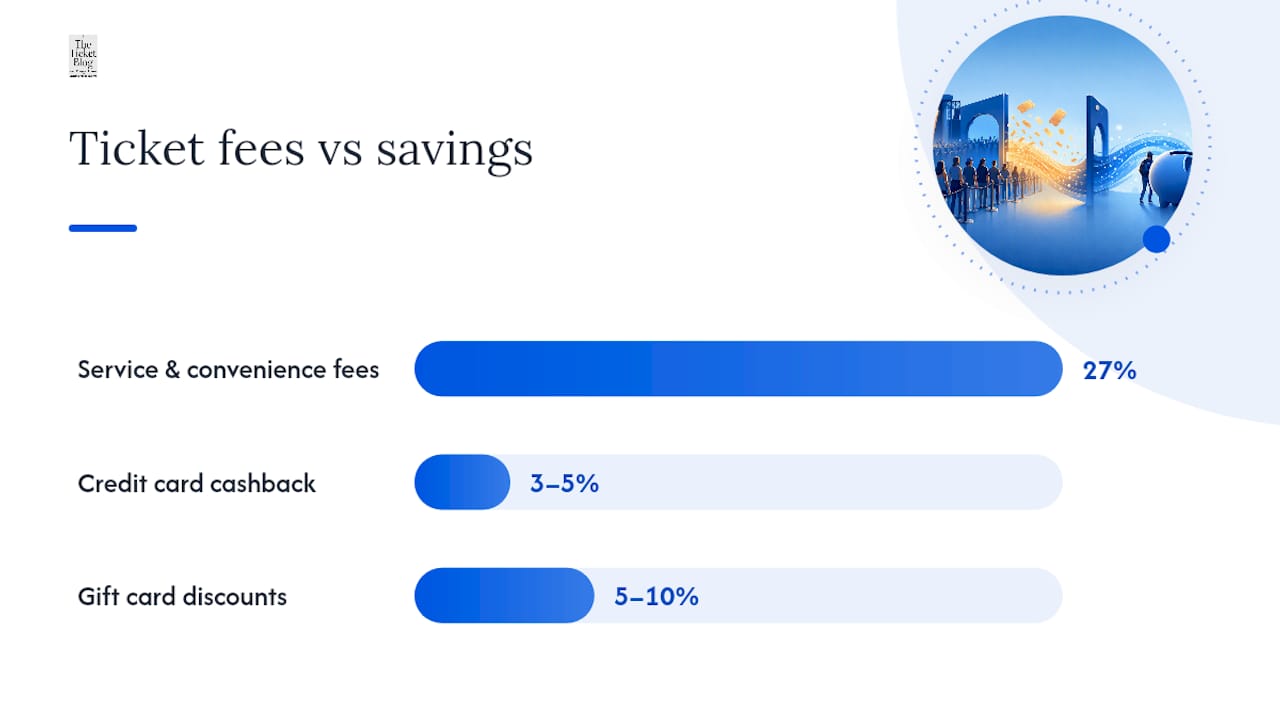
Always compare all-in prices | Service fees can add roughly 27% or more to face value (with a typical ~27% average based on consumer-focused studies); check TickPick, SeatGeek, and StubHub totals side by side. |
Wait 48–72 hours for non-blockbuster shows | Resale prices often drop in the final two to three days; set alerts and act fast when they fire. |
Split bundle deals with friends | Live Nation’s 4-pack deals can cut per-ticket cost to roughly $25 on shows where individual tickets run $45–$65 after fees. |
Control non-ticket costs | Carpooling, pre-booked parking, and eating before the show can save $30–$60 per night beyond the ticket price. |
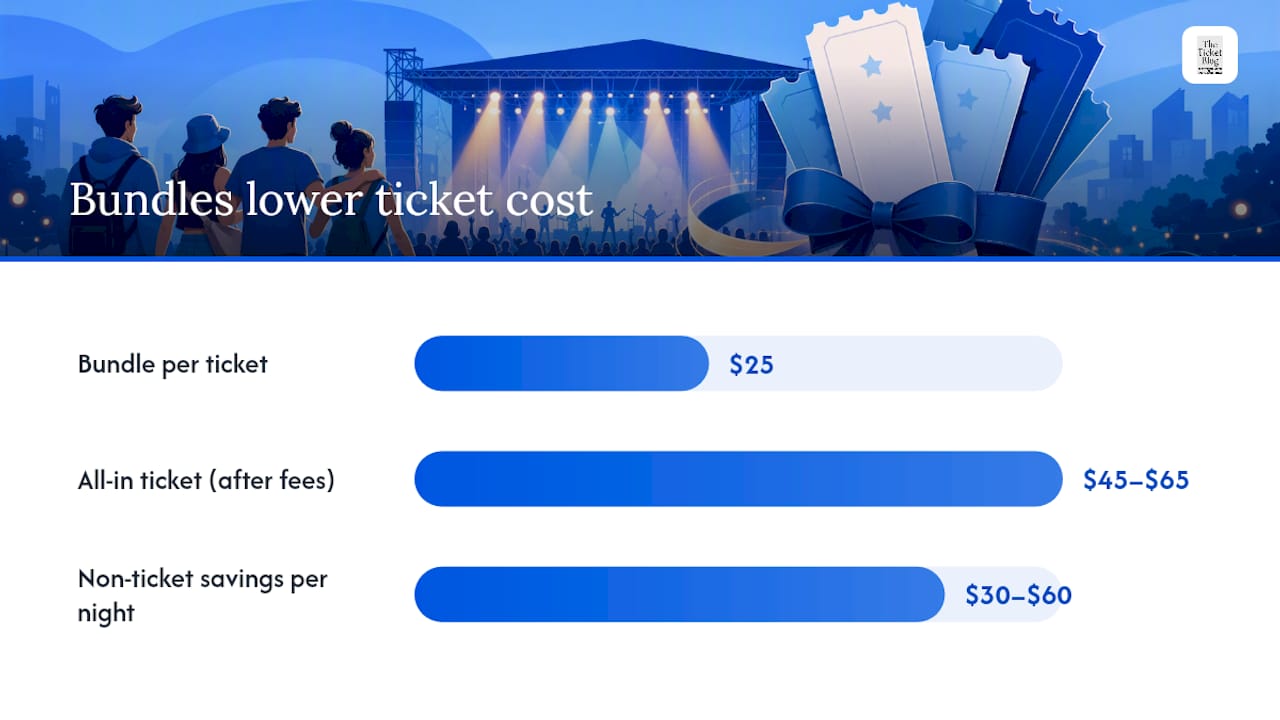
Table of Contents
How do resale marketplaces and timing affect what you pay for GA tickets?
Do bundles and group packs actually lower your per-ticket GA cost?
What are the most effective ways to reduce ticket fees at checkout?
Can volunteering or contests get you into GA shows for free?
How do you get the most out of a GA ticket once you have it?
Which apps and tools help you track and compare GA ticket prices?
Why are these tactics credible? The Ticket Blog’s approach and the research behind it
The Ticket Blog’s personal habits for seeing more GA shows on a budget
How do presales help you get face-value GA tickets?
Presales are the single most reliable way to buy affordable concert tickets at or near face value before dynamic pricing and resale markups take hold. Fan clubs, venue newsletters, and credit-card programs are the three most consistent sources, and each one requires a slightly different setup.
The main presale sources, ranked by reliability for GA tickets:
Artist fan clubs and verified fan programs (Ticketmaster Verified Fan, for example): These target actual fans over bots. Register on the artist’s official site well before the sale date, and watch your email for a unique access code.
Venue mailing lists: Sign up for every venue in your area. Venues often hold a block of face-value GA tickets for subscribers that never appear on the main sale page.
Credit card presales: Citi, Capital One, and American Express all run entertainment presale programs. If your card offers this perk, add it to your wallet before the next tour cycle.
Phone carrier promotions: T-Mobile Tuesdays and similar carrier deals occasionally include presale codes or discounted tickets for select shows.
Radio station promotions: Local stations sometimes partner with promoters for listener presales, especially for mid-size venue shows where GA is the primary ticket type.
How to prepare so you’re ready when codes drop:
Create accounts on Ticketmaster and Live Nation before you need them, and save your payment info
Set a calendar reminder 30 minutes before each presale window opens
Have your presale code copied and ready to paste at the moment the queue opens
Use a wired internet connection or a strong Wi-Fi signal, not mobile data, for high-demand sales
Presales matter most for stadium tours and sold-out club shows where GA floor tickets disappear in minutes. For a routine weeknight show at a 500-capacity club, the general sale usually has plenty of GA inventory. Spend your presale energy on the tours where demand is genuinely high.
Pro Tip: Ticketmaster’s Verified Fan presale is often the highest-leverage option for GA floor tickets on major tours. Registration is free and takes two minutes. The Ticket Blog’s summer buying checklist walks through the full registration-to-purchase sequence so nothing falls through the cracks.
When does buying at the box office actually save you money?
Buying directly at a venue’s physical box office can sidestep the online convenience fees that significantly inflate the all-in price at checkout. Not every venue passes those savings along, but enough do that it is worth a phone call before you click “buy.”
Here is when the box office route makes the most sense:
Local and regional venues (theaters, amphitheaters, mid-size clubs) are more likely to sell at face value with no added service fee at the window
Day-of-show purchases: Some venues release a small block of face-value GA tickets at the box office on the day of the show, even when the online sale shows “sold out”
Will-call pickup: Choosing will-call instead of mobile or print-at-home delivery sometimes removes a delivery fee entirely
Practical steps for a successful box-office visit:
Call the venue’s box office line the morning of or the day before the show and ask directly: “Do you sell tickets at the window without a service fee?”
Visit midday on a weekday if you can; lines are shorter and staff have more time to answer questions
Bring a government-issued photo ID and the credit card you plan to pay with
Ask whether the venue accepts cash, since some smaller venues discount or waive fees for cash purchases
A real-world example: a $35 GA ticket to a mid-size amphitheater show purchased through Ticketmaster online can carry $12–$15 in service and facility fees. The same ticket bought at the box office window on the day of the show, if available, costs $35 flat. That is a meaningful difference for anyone attending multiple shows a season.
AARP’s guide to saving on summer concerts confirms that venues sometimes release face-value inventory at the window after online inventory appears exhausted, making the box office a legitimate last-resort option even for shows that look sold out online.
Pro Tip: Call the box office, not the venue’s general line. Box office staff can tell you exactly what fees apply to in-person purchases and whether any GA tickets will be released day-of.
How do resale marketplaces and timing affect what you pay for GA tickets?
Resale pricing for GA tickets typically follows a pattern where prices tend to soften in the final 48–72 hours before the show as sellers reduce listings to avoid unsold inventory. Local reporting on 2026 concert spending confirms this window as a viable savings tactic for many shows, though it carries real risk on blockbuster tours where demand stays high until the last minute.
How to navigate resale platforms safely:
StubHub offers a buyer guarantee and displays all-in pricing when you toggle that option. It is one of the largest resale markets, which means more listings but also more price variation.
SeatGeek aggregates listings from multiple sources and shows a “Deal Score” that grades each listing against comparable tickets. Useful for a quick read on whether a price is fair.
TickPick stands out because it displays no-fee pricing by default, so the price you see is the price you pay. That transparency makes cross-platform comparison faster.
Always compare the all-in total across at least two platforms before buying. Fee analyses show convenience and service charges can add roughly 27% or more to a ticket’s face price, and that percentage varies by platform and event. A $40 listing on one site may cost more at checkout than a $45 listing on a no-fee platform.
For last-minute buying, The Ticket Blog’s guide to cheap last-minute concert tickets covers the specific steps to move quickly when a price alert fires.
Statistic to watch: Service and convenience fees can add roughly 27% or more to a ticket’s face price, according to consumer-facing fee analyses that observe a typical average around 27% but sometimes higher for certain venues or events. Always check the all-in total before you commit.
Pro Tip: Set a price alert on SeatGeek or StubHub at 20% below the current asking price for your target show. If the alert fires in the final 72 hours, buy immediately. Do not wait for a second drop on high-demand tours — that second drop rarely comes.
Do bundles and group packs actually lower your per-ticket GA cost?
Yes, when the math works in your favor. Live Nation’s Summer of Live 4-Pack offered $99 four-packs for participating amphitheater shows, according to Digital Music News. Split four ways, that is roughly $25 per ticket for shows where individual GA tickets regularly list at $45–$65 after fees. The savings are real, but only if you can fill the pack, which makes these deals worthwhile for groups.
Common bundle formats to watch for:
4-packs: Four GA tickets at a flat bundle price, typically offered by Live Nation for amphitheater shows during summer
Buy-one-get-one (BOGO) promotions: Occasional flash sales tied to slow-selling dates or promotional partnerships
Season passes and multi-show packages: Some venues sell passes covering multiple shows in a season, which can drop the per-show cost significantly for frequent attendees
Bundle math example: A $99 four-pack for a show where individual GA tickets cost $50 each (before fees) saves each person in the group roughly $25 per ticket, or $100 total across the group.
The readers who benefit most from bundles are groups of three or four friends who already plan to attend the same show, and families with kids attending all-ages amphitheater events. Timing matters: Live Nation typically announces summer bundle deals in April and May, so watch the Live Nation promotions page and set a calendar reminder for early spring.
Pro Tip: Create a group text with three friends at the start of each concert season. Agree on two or three shows you all want to attend, then designate one person to monitor bundle announcements. Splitting the coordination means no one misses a deal because they were not paying attention.
What are the most effective ways to reduce ticket fees at checkout?
Fees are where a lot of money quietly disappears. A consumer-facing analysis found that convenience and service charges can add roughly 27% or more to a ticket’s face price (with 27% as a representative average in some studies), and investigative reporting has flagged deceptive fee practices across the ticketing market. The good news: several of these charges are avoidable with deliberate choices at checkout.
Fee-reduction tactics that work:
Choose mobile or will-call delivery instead of print-at-home or mail; delivery fees for digital tickets are often lower or zero
Buy a single ticket when you need only one; some platforms charge a per-order fee that is the same whether you buy one or four, making single purchases relatively cheaper per ticket
Use the box office for in-person fee avoidance (covered in detail above)
Apply promo codes before checkout; The Ticket Blog tracks active codes for major platforms
Payment tactics that add up over a season:
Use a credit card that earns 3–5% cashback on entertainment purchases. Cards like the Capital One Savor or the Chase Sapphire Preferred earn meaningfully on live event spending.
Buy discounted gift cards for Ticketmaster or Live Nation through sites like Raise or CardCash before purchasing tickets. A 5–10% discount on a gift card translates directly to savings on face-value tickets.
Check your employer’s benefits portal. Many large employers offer discounted tickets through programs like Tickets at Work or Working Advantage.
If you are a student or active-duty military, ask the box office directly about discount tiers. Student discount eligibility varies by venue and event but is worth a 30-second inquiry.
Fee reality check: On a $50 GA ticket, a 27% fee load adds $13.50. Across ten shows a year, that is $135 in fees alone (assuming the typical ~27% average cited in multiple consumer fee analyses). Cutting even half of that through box-office buys, promo codes, and gift-card discounts puts real money back in your pocket.
Pro Tip: Before finalizing any online ticket purchase, open the box office phone number in a second tab. A 60-second call can confirm whether in-person purchase saves you the service fee. If it does, hang up and drive over.
Can volunteering or contests get you into GA shows for free?
Absolutely, and this route is underused by most fans. Volunteering at festivals and venues trades a few hours of labor for free or heavily discounted admission, making it one of the strongest time-for-ticket value exchanges available.
How to find and access volunteer opportunities:
Festival volunteer programs: Major festivals like Bonnaroo, Lollapalooza, and regional equivalents recruit volunteers each season. Search “[festival name] + volunteer” to find the application page. Most programs offer full weekend passes in exchange for 16–24 hours of work spread across the event.
Venue-specific volunteer roles: Some nonprofit-operated venues (performing arts centers, community theaters) use volunteers for ushering, coat check, and event setup. Contact the venue’s volunteer coordinator directly.
Nonprofit concert series: Organizations that produce free or low-cost outdoor concerts often need volunteers for setup, teardown, and crowd management.
Seat-filling services: Services like Goldstar and similar platforms occasionally offer deeply discounted or complimentary tickets to fill unsold seats, particularly for smaller shows and theater productions.
Radio and brand contests: Follow local radio stations and brand social accounts. Contest tickets for GA shows are a consistent, low-effort route to free admission.
The time-to-value math is straightforward. A weekend festival pass worth $350 in exchange for 20 hours of volunteering works out to $17.50 per hour of your time. For a dedicated fan, that is a strong trade.
Pro Tip: Combine the volunteer route with presale registration. Apply to volunteer at a festival, then also register for the artist presale in case your volunteer application is not accepted. You end up with two shots at the same event, and the presale costs nothing to enter.
How do you get the most out of a GA ticket once you have it?
General admission means no assigned seat, which sounds like a disadvantage until you realize it gives you full control over your experience. The tactics below are specific to GA formats: standing room, lawn sections, and festival grounds.
GA logistics and value-maximizing moves:
Arrive 60–90 minutes early for shows where front-of-stage proximity matters to you. The GA floor fills from the front, and the best spots go to the earliest arrivals.
Check the venue’s reentry policy before you go. Many venues allow reentry with a wrist band, which means you can leave to eat at a cheaper restaurant nearby and return without losing your spot in a lawn or general area.
Eat before the show or bring permitted snacks when the venue allows outside food. Venue concession prices are consistently high; a meal before arrival can save $15–$25 per person.
Carpool or use public transit. Parking at large venues often runs $20–$40. Split four ways, carpooling cuts that to $5–$10 per person. Many amphitheaters are also accessible by transit on show nights.
Pre-book parking through SpotHero or ParkWhiz if you must drive. Pre-booked spots near the venue typically cost 30–50% less than the venue’s own lot on the day of the show.
For groups attending GA shows together, pooling transit costs is one of the fastest ways to lower the total per-person spend beyond the ticket price itself. Practical advice on pre-booking and carpooling consistently shows that non-ticket costs can add $30–$60 to a night out, and most of that is avoidable.
Pro Tip: If front-row proximity is your goal but you do not want to arrive two hours early, target smaller venues with 500–1,500 capacity. The same artist on a club tour often plays within 20 feet of the audience regardless of where you stand, and tickets cost a fraction of the arena price.
Which apps and tools help you track and compare GA ticket prices?
Price tracking tools turn reactive buying into a deliberate strategy. Aggregator apps and marketplaces let you set price-drop alerts so you can buy when resale listings fall to your target all-in price rather than buying out of anxiety.
The most useful tools for GA ticket tracking:
SeatGeek: Set a price alert on any event and receive a push notification when listings drop to your target. The Deal Score feature grades listings in real time.
StubHub: Price alerts are available via email or app notification. The all-in pricing toggle shows the true checkout cost so you are comparing apples to apples.
TickPick: No-fee pricing by default makes it the easiest platform for honest cross-comparison. Set a “Best Price” alert and TickPick emails you when a listing hits your number.
Google Alerts: Set an alert for “[Artist Name] + tickets + discount” to catch promotional announcements, fan club sales, and news about added dates that sometimes come with introductory pricing.
How to configure alerts effectively:
Set your target price at the all-in total, not the face value. Include estimated fees when you set the threshold.
Create two alert tiers: one at your ideal price and one at your “I’ll take it” price. The second tier catches deals when the ideal price never materializes.
Enable SMS or push notifications rather than email-only alerts. Resale prices move fast, and an email you read six hours later may be too late.
Pro Tip: When an alert fires in the final 48 hours before a show, act within 15 minutes. Resale listings at below-market prices sell quickly, and the window between “alert fires” and “listing gone” is often shorter than most fans expect.
Why are these tactics credible? The Ticket Blog’s approach and the research behind it
The tactics in this guide are not theoretical. They reflect patterns documented by consumer advocates, investigative reporters, and fans who attend dozens of shows a year.
What the research and reporting support:
The FTC and consumer watchdogs have scrutinized ticketing market concentration and deceptive fee practices, which is why the all-in price comparison tactic is not just practical advice but a consumer-protection response to a documented market problem.
CNET’s reporting on seasoned concertgoers confirms that fans who use presales, follow artists, and leverage credit-card benefits consistently save hundreds of dollars across a year of live events.
AARP’s summer concert guide documents the box-office face-value release tactic as a real and repeatable option at many venues.
The Star Tribune’s 2026 local reporting validates the 48–72 hour resale drop as a documented behavior pattern, not just fan folklore.
The Ticket Blog tests these tactics across real purchases: box-office buys at mid-size amphitheaters, last-minute resale purchases on SeatGeek and TickPick, and bundle splits with groups of four. The consistent finding is that combining two or three tactics (presale plus box office, or bundle split plus cashback card) produces the largest savings, not any single move in isolation.
Pro Tip: Run your own quick test on the next show you attend. Buy one ticket through the primary platform online and note the all-in price. Then call the box office and ask for the in-person price. The difference is your baseline fee number for that venue, and it tells you exactly how much the box-office route saves you going forward.
The Ticket Blog’s personal habits for seeing more GA shows on a budget
The most consistent savings come not from a single clever trick but from a set of repeatable habits built around the concert calendar.
The Ticket Blog’s editorial team keeps a dedicated “concert fund” — a small monthly transfer into a separate savings account earmarked for live events. When a bundle deal or last-minute price drop appears, the money is already there. That removes the temptation to finance a ticket purchase, which adds interest on top of already-inflated fees.
Three habits worth copying:
The presale routine: Every Monday morning, check the artist pages for any tour you are tracking and confirm whether a presale is live or upcoming. Five minutes a week prevents missing a presale window.
The friend pool: Maintain a standing group of three friends who share similar music taste. When a bundle deal appears, the group text goes out immediately. Having pre-committed concert partners means bundle savings are always accessible.
The all-in comparison habit: Before any ticket purchase, open two platforms side by side and compare the all-in total. This takes 90 seconds and has consistently identified the cheaper option.
These habits compound. A fan who uses presales for two shows, splits a bundle for one, and buys at the box office for another can realistically attend four GA shows for the cost of two purchased impulsively through a single platform at full price with fees.
Sources
Short list of the primary sources behind this guide, each worth bookmarking for ongoing updates:
Recommended


Comments