How Theater Ticket Pricing Works: 2026 Guide


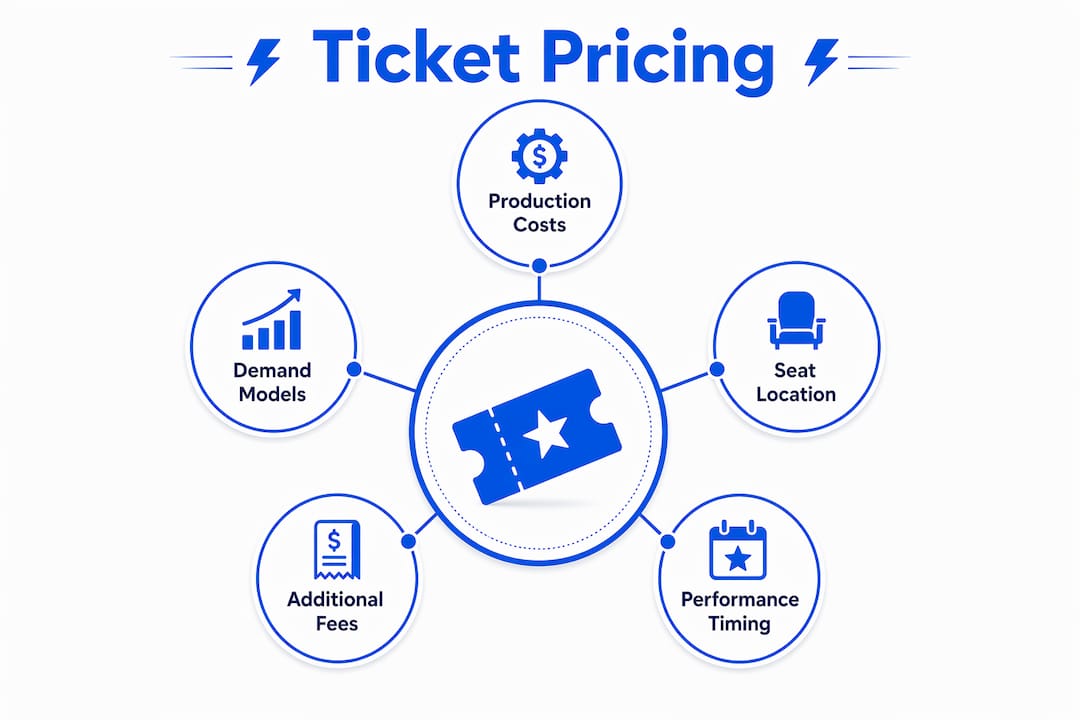
Theater ticket pricing is determined by a layered combination of production costs, seat location, demand-based models, and platform fees added at checkout. Understanding this structure explains why two seats in the same venue for the same show can differ by hundreds of dollars, and why the price you see first is rarely what you pay. This guide breaks down every factor that shapes the final number on your receipt, from royalties and venue rent to dynamic pricing algorithms and service charges, so you can buy smarter and stop being surprised.
How theater ticket pricing works: the core components
The base price of a theater ticket reflects what it costs to produce and present a show, divided across every seat in the house. That calculation is more precise than most buyers realize.
Production costs fall into several fixed categories. Royalties alone typically account for 15 to 16% of ticket sales, plus VAT, meaning roughly 18 to 19 cents of every dollar goes directly to playwrights, composers, and rights holders before a single performer is paid. On top of that, production management fees can exceed £4,000 per show. These are non-negotiable costs that set a price floor before demand or location even enter the picture.

Venue capacity is the other structural constraint. A small theater production with costs near £30,000 needs approximately 75 to 80% of seats sold at £18 to £20 each just to break even. That math forces producers to price tickets high enough to cover fixed costs even when attendance is imperfect. Larger West End or Broadway productions face the same logic at a bigger scale, with fixed weekly theater rents and union guarantees setting a structural price floor that exists entirely independent of demand.
The numbers from London’s West End illustrate how sharply these pressures have grown. Between 2023 and 2024, top ticket prices rose 50%, climbing from an average of £94.45 to £141.61. Even the cheapest available tickets rose 25%, from £24.58 to £30.55. That is not price gouging. It reflects genuine cost inflation across staffing, venue hire, costumes, and set construction.
The main cost categories that feed into base ticket prices include:
Royalties and rights fees: 15 to 16% of ticket revenue, paid to creators and rights holders
Venue hire and weekly rent: Fixed costs regardless of how many tickets sell
Cast and crew wages: Union minimums on Broadway and West End set non-negotiable floors
Set, costumes, and production design: One-time capital costs amortized across the run
Marketing and box office fees: Typically 3 to 5% of ticket revenue
Pro Tip: When a show announces a limited run, expect prices to start higher. Producers have fewer performances over which to spread fixed costs, so each ticket must carry more of the financial load.
How does variable and dynamic pricing affect theater ticket costs?
Variable pricing and dynamic pricing are related but distinct strategies, and theaters use both to manage revenue across a run.
Variable pricing sets different price tiers before tickets go on sale, based on predictable demand factors. A Saturday evening performance costs more than a Tuesday matinee because producers know demand will be higher. These price differences are fixed in advance and do not change based on real-time sales data. Variable pricing is transparent and easy for buyers to plan around.
Dynamic pricing goes further. It adjusts prices continuously based on live sales velocity, remaining inventory, and demand signals. If a Friday night show is selling fast, the algorithm raises prices on remaining seats. If a Wednesday matinee is sitting at 40% capacity two weeks out, prices drop to stimulate sales. Smart Pricer customers using this model see 3 to 8% higher capacity utilization and 5 to 15% increased revenue. That is a meaningful gain for productions operating on thin margins.
One aspect of dynamic pricing that surprises many buyers: it works in both directions. Prices are also lowered during unsold low-demand periods to fill seats, a move that is largely invisible to casual buyers who only check prices once. If you check a show’s prices on multiple days, you may find they fluctuate by 20 to 30% depending on sales momentum.
The technology behind this is increasingly sophisticated. Software platforms analyze historical sales patterns, competitor pricing, and even social media sentiment to recommend price adjustments. Software tools are now critical infrastructure for any theater running more than a few dozen performances per year.
“Transparency in pricing encourages customer acceptance of dynamic pricing even if prices vary.” — IQ Smart Pricer International Ticketing Report
The quote above captures the central tension. Buyers accept price variation when they understand why it happens. Theaters that communicate their pricing logic clearly generate far less backlash than those that let buyers discover price changes without context.
Pro Tip: Set a price alert or check ticket prices on multiple days before buying. Dynamic pricing means the same seat can cost less on a Tuesday afternoon than it did on a Saturday morning.
How do additional fees impact the final ticket cost?
The face value printed on a ticket is rarely what you pay. Platform fees, service charges, and delivery costs are layered on top at checkout, and the total can be jarring.
Ticketmaster fees add approximately 27% on top of the base ticket price. On a $150 ticket, that means $40.50 in additional charges before you confirm the purchase. Those charges typically break down into a service fee, an order processing fee, a facility charge set by the venue, and a delivery or print-at-home fee.
Here is how the fee structure compares across common purchase channels:
Purchase channel | Typical fee range | Notes |
Ticketmaster | 20 to 30% above face value | Includes service, processing, and facility fees |
Direct box office | 0 to 5% | Lowest fees; sometimes free with cash payment |
Ticket Tailor | Flat fee per ticket | Transparent model; sellers absorb or pass on costs |
Secondary market resellers | 10 to 30% buyer premium | Prices already above face value before fees apply |
Service fees are not purely cost recovery. They are also a profit source for the platform, and the markup varies widely. Buyers who purchase directly from the theater box office, either in person or via the venue’s own website, consistently pay lower total prices. The savings are not trivial. On a pair of $80 tickets, buying direct can save $25 to $40 compared to a major third-party platform.
Here is how to minimize fees when buying theater tickets:
Buy directly from the venue box office whenever possible, in person or through the theater’s own website.
Look for all-in pricing displays before selecting seats. Some platforms now show the total cost upfront, which makes comparison easier.
Avoid expedited or physical delivery options. Print-at-home or mobile tickets eliminate delivery fees entirely.
Check whether the theater offers a membership or subscription program. Many regional theaters waive or reduce fees for members.
Use a credit card with no foreign transaction fees for international productions to avoid currency conversion markups.
Pro Tip: Fees are often bundled and layered, making it hard to compare prices across platforms at a glance. Always click through to the final checkout screen before assuming one platform is cheaper than another.
How do seat location and show timing influence ticket prices?
Seat location and performance timing are the two most visible variables in theater ticket pricing, and both follow predictable patterns once you know what to look for.
Proximity to the stage drives the most significant price differences within a single performance. Orchestra center seats in a Broadway or West End production command the highest prices, followed by front mezzanine, side orchestra, and rear mezzanine. Obstructed view seats and standing room options sit at the bottom of the pricing tier. For a popular West End production, ticket prices ranged from £32 for last-minute cheap seats to £227 for premium opening-night seats for the same show. That is a sevenfold price difference within a single production.
Performance timing creates a second pricing layer. Weekend evening shows consistently carry the highest prices because demand peaks on Friday and Saturday nights. Weekday matinees, particularly Tuesday and Wednesday afternoons, are the most affordable performances in almost every theater’s schedule. Holiday periods, opening nights, and press nights carry premium pricing because demand is concentrated and supply is fixed.
Theaters use these timing tiers strategically. Balancing premium seats with lower-priced tickets subsidizes accessibility and helps sustain operations. A theater that sells 20% of its seats at premium prices can afford to offer discounted tickets for students, seniors, and last-minute buyers without losing money on the run.
Key factors that push prices up or down by seat and timing:
Front orchestra center: Highest demand, highest price, often the first to sell out
Rear mezzanine or balcony: Lower demand, more price flexibility, good value for long-running shows
Tuesday and Wednesday matinees: Lowest demand periods, best prices for budget-conscious buyers
Opening week and closing weekend: Both carry premium pricing due to event status and scarcity
Last-minute rush tickets: Many theaters release deeply discounted day-of tickets at the box office to fill unsold seats
Key takeaways - How Theater Ticket Pricing Works
Theater ticket pricing combines fixed production costs, demand-based pricing models, seat location tiers, and platform fees to produce the final price a buyer pays at checkout.
Point | Details |
Production costs set the price floor | Royalties, venue rent, and wages create a baseline that tickets must cover regardless of demand. |
Dynamic pricing moves prices in both directions | Prices rise when demand is high and fall when seats are unsold, so checking prices on multiple days can save money. |
Platform fees add 20 to 30% above face value | Buying directly from the theater box office is the most reliable way to reduce total cost. |
Seat location creates sevenfold price differences | Premium orchestra seats and opening nights cost far more than rear mezzanine or weekday matinee tickets for the same show. |
Transparency drives buyer acceptance | Theaters that explain their pricing logic clearly face less resistance to price variation than those that do not. |
What I’ve learned about theater pricing after years of tracking tickets
After tracking ticket prices across hundreds of productions, the pattern that stands out most is how poorly the industry communicates its own pricing logic. Buyers feel manipulated by dynamic pricing not because prices change, but because no one explains why. A simple message at checkout stating that prices reflect current demand would reduce frustration significantly. The data supports this. Buyers who understand the system accept it.
The other observation worth sharing: the best deals in theater are almost never found through major third-party platforms. The box office, the theater’s own website, and last-minute rush programs consistently offer better value. For long-running shows, checking prices on a Tuesday afternoon versus a Friday morning can reveal a 20 to 30% difference for the same seat. Most buyers never check twice.
Theticketblog has covered secondary ticket markets in depth, and the same principle applies to theater: understanding how pricing works is the single most effective tool for paying less. The buyers who feel cheated are almost always the ones who skipped this step.
— The
Find the best theater ticket deals with The Ticket Blog
The Ticket Blog tracks pricing trends, fee structures, and discount opportunities across theater, concerts, and live events so you never pay more than you need to.

Whether you want to decode a confusing fee breakdown or find the right moment to buy tickets for a hot West End or Broadway production, The Ticket Blog has the guides and tools to help. The site covers everything from promo codes and discount strategies to platform comparisons and insider buying tips. Visit The Ticket Blog to stay ahead of price changes, avoid unnecessary fees, and get the seats you want at a price that makes sense.
FAQ
How are theater ticket fees calculated?
Platform fees on theater tickets typically add 20 to 30% above the face value, covering service charges, order processing fees, facility charges, and delivery costs. Buying directly from the theater box office eliminates most of these charges.
What is the difference between variable and dynamic ticket pricing?
Variable pricing sets fixed price tiers before tickets go on sale based on predictable factors like day of the week or seat location. Dynamic pricing adjusts prices in real time based on live sales data and remaining inventory.
Why are theater tickets so expensive?
Theater ticket prices reflect fixed costs including royalties at 15 to 16% of sales, venue rent, union wages, and production design, all of which must be recovered across a limited number of performances and seats.
How does seat location affect ticket price?
Front orchestra center seats carry the highest prices due to demand, while rear mezzanine and obstructed view seats cost significantly less. For a single West End production, the price gap between the cheapest and most expensive seats can be sevenfold.
When is the cheapest time to buy theater tickets?
Tuesday and Wednesday matinees consistently offer the lowest prices. Last-minute rush tickets released at the box office on the day of the performance are also a reliable source of discounted seats for popular productions.
Recommended


Comments