Best Seats per Dollar at Sports Venues: Fan Value Guide

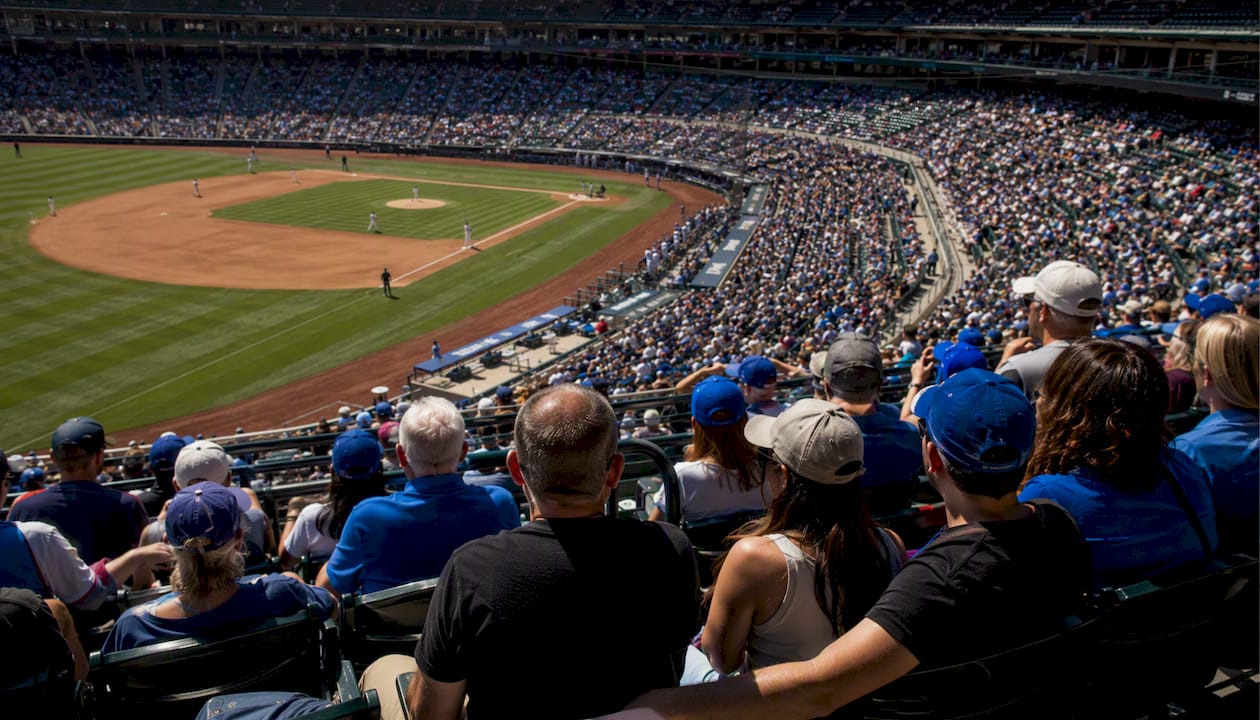
Mid-tier center sections, front rows of infield levels, and 200-level center seats consistently deliver the best seats per dollar at sports venues across the country. Three rules explain why: sightlines beat raw proximity (being closer to the field does not automatically mean seeing more of it), the best row in a cheaper tier usually outperforms the worst row in a pricier one, and center position always beats corner position at the same price. Here is what that looks like in practice: at MetLife Stadium, upper-midfield seats in Section 338 give you a full-field view for a fraction of lower-bowl corner prices; at Yankee Stadium, Main Level infield sections (200s) open the full diamond at a manageable price; at Madison Square Garden, 200-level center front rows put you above the lower-bowl obstructions with a clean sight line to the court.
Affordability is now the top factor fans cite when choosing seats, and the gap between what fans pay and what they actually see has never been more worth scrutinizing.
Table of Contents
What are the universal rules for best seats per dollar?
Rule 1: Sightlines beat proximity
Being in Row 1 of a lower-bowl corner section sounds premium. In practice, you are watching the game at a sharp angle, craning your neck to follow play on the far side of the field or ice. A seat 40 rows higher but directly on the center line gives you the full picture. The geometry is simple: angle of view matters more than distance to the nearest player.
Pro Tip: Before buying, pull up the venue’s seating chart and draw an imaginary line from the seat to the center of the playing surface. If that line crosses a corner or end zone, keep looking.
Rule 2: Buy the best row in a cheaper tier
The front rows of any tier, whether it is a 200-level concourse or a mezzanine infield, punch well above their price. They combine the elevation of the tier with proximity to the tier’s front rail, giving you unobstructed views without the premium price of the lower bowl. Back rows of a cheaper tier, by contrast, often sit under an overhang that cuts off the scoreboard and upper-field views. Front rows of an upper tier or the first rows before a concourse represent the most consistent value-per-dollar across venues, combining elevation, sightline clarity, and easy egress.
Rule 3: Steep bowls reward mid-level buyers; flat bowls punish them
A purpose-built steep bowl, like UBS Arena or T-Mobile Arena, keeps upper and mid-level seats close to the action. Older, flatter venues push those same seats back and up in ways that feel genuinely distant. Venue modernization efforts are specifically targeting upper-deck sightlines because designers know the flat-bowl problem is real. At a steep-bowl arena, a 200-level center seat is a genuine value pick. At a flat, older stadium, you may need to move down a level to get the same quality view.
Which seats give the best value by sport?
Football
Upper-sideline midfield is the sweet spot for NFL value. Upper-sideline sections in NFL stadiums commonly provide midfield views for less money than lower-bowl midfield seats, and the elevation actually helps you read the play. At SoFi Stadium, the upper-midfield sections give a clean end-to-end view; the lower-bowl corner seats cost more and show you less of the field. At MetLife Stadium, the same logic applies: upper-midfield outperforms lower-bowl corner for football, especially for a regular-season game where the price gap is widest.
Seats to skip: end-zone seats (you lose depth perception on plays going away from you) and low-corner seats that angle you away from midfield action.
Baseball
A slight elevation opens the full diamond. For baseball, mid-level infield sections, labeled Main Level, Mezzanine, or 200s depending on the park, give you the best combination of diamond view and price. Field-level corner seats are cheaper but cut off your view of the far base and the outfield wall. Deep outfield field-level seats are the worst value in the park for watching the game.
At Yankee Stadium, the Main Level infield (200s) is the strongest value-per-dollar zone. On a tighter budget, Grandstand infield sections still keep you on the correct side of the diamond. At Citi Field, the Excelsior/Mezzanine infield sections are the clear sweet spot over far outfield corners.
Basketball
For basketball, the choice splits by budget. If you can stretch to the lower bowl, sideline seats in the first 15 rows give you the best view of the half-court action. If you are working with a tighter budget, 200-level center front rows are the right call. They sit above the lower-bowl behind-basket rows, which are technically closer but give you a terrible angle on plays at the far end.
At Madison Square Garden, 200-level center front rows consistently outperform lower-bowl behind-basket seats on a per-dollar basis. At Barclays Center, lower-bowl sideline seats are worth the stretch for a big game; for a regular-season matchup, 200-level center front rows are the smarter buy.
Seats to skip: behind-basket rows in any tier, which sacrifice the full-court view for proximity to one end.
Hockey
Center-ice 200-level is the best value in most hockey arenas, full stop. You need to see both goals to follow the game, and low-corner seats cut off the far goal entirely. UBS Arena’s steep bowl design makes upper-center 200-level sections a genuine value for hockey, where upper-center often beats lower-bowl corners for watching the full ice. The steep rake keeps you connected to the action even from the upper level.
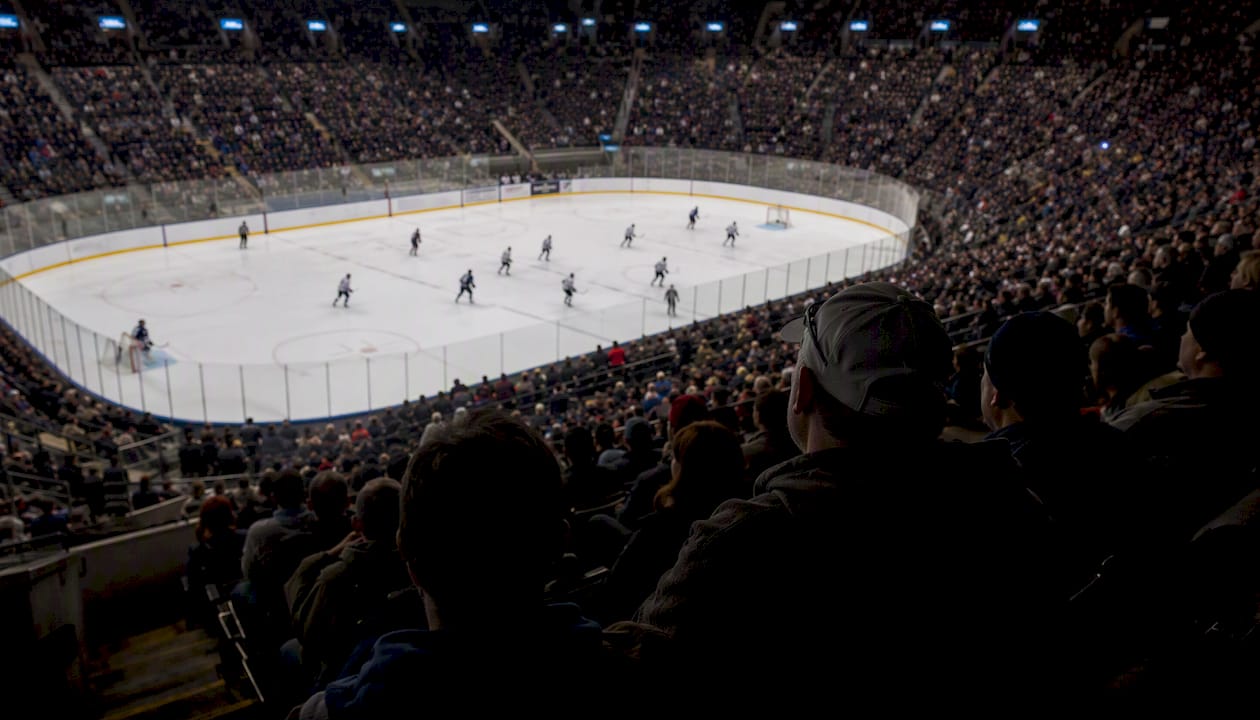
Seats to skip: low-corner seats behind either goal, which give you a partial view of the ice and make the far end nearly invisible.
Concerts and fights
For concerts, avoid flat-floor rows unless you are in the first 10–15 rows or the floor is raked. Mid-rows on a flat floor put you behind taller fans with a blocked view of the stage. Mid-tier lower-bowl center rows are the reliable pick. At T-Mobile Arena, lower-bowl center mid-rows are the universal sweet spot, and upper concourse front rows (Rows A–E) are strong budget alternatives in its steep upper deck.
For boxing and MMA, choose mid-tier lower-bowl rows 15–25. Ringside floor seats sound glamorous but put you below the ring surface, and camera rigs at rows 1–5 can block your view entirely. Mid-tier rows give you the elevation to see over the ring ropes and the full canvas.
How do the rules play out at major U.S. venues?
Madison Square Garden
MSG’s 200-level center front rows are the most consistent value in the building for basketball and hockey. Lower-bowl behind-basket seats cost significantly more but give you a worse angle on plays at the far end. Target Rows 1–5 of center 200-level sections for the best combination of price and sightline. NYC venue analysis confirms that mid-level center zones are the strongest cross-sport value zones at MSG.
Yankee Stadium
The Main Level infield (200s) is the best baseball view-per-dollar at Yankee Stadium. You get the full diamond view, reasonable proximity to the action, and prices well below the lower-level premium seats. On a stricter budget, Grandstand infield sections keep you on the infield side without the outfield-corner penalty.
Citi Field
The Excelsior and Mezzanine infield sections are the value sweet spot at Citi Field. They sit above the field level with a clean view of the full diamond. Far outfield corners are cheaper but cost you the game-watching experience. For the Mets, the Promenade infield is a solid fallback when Excelsior prices spike.
Barclays Center
For Nets games, lower-bowl sideline seats are worth the premium for a playoff game or a marquee matchup. For a regular-season game, 200-level center front rows deliver strong value. The building’s configuration means that behind-basket seats at any level are the seats to avoid.
UBS Arena
UBS Arena’s steep bowl is one of the best arguments for 200-level center seating in the country. The rake keeps upper-center seats close to the ice in a way that flat-bowl arenas cannot match. For Islanders games, center-ice 200-level front rows are the clear value pick over lower-bowl corner seats.
T-Mobile Arena
T-Mobile’s steep upper deck makes its upper concourse front rows (Rows A–E) a genuine budget option for concerts and Golden Knights games. Lower-bowl center mid-rows remain the top pick when budget allows. The tiered design and configuration differences at arenas like this show how steep-bowl construction changes the value equation at every level.
SoFi Stadium and MetLife Stadium
Both large NFL stadiums reward the same strategy: upper-midfield over lower-bowl corner. At SoFi, the upper-midfield sections give a full end-to-end view with good elevation. At MetLife, the same principle holds, and the price gap between upper-midfield and lower-bowl corner is often wide enough to make the choice obvious. For World Cup 2026 matches at these venues, host city stadium dynamics follow the same midfield-center logic, where demand for lower-bowl corner seats rarely justifies the premium over upper-midfield.
How do you evaluate a seat’s value before you buy?
Run through this checklist on any listing before you commit:
Section angle: Is the section on the sideline/infield side, or does it angle toward a corner or end zone?
Row within section: Are you in the front half of the tier, or buried in the back under an overhang?
Elevation: Does the seat sit high enough to see over standing fans and the playing surface edge?
Obstructions: Check for camera rigs, support columns, or rail obstructions using the venue’s seat-view photos.
Concourse/aisle proximity: Front-row seats on an aisle give you easy exit and re-entry without disturbing neighbors.
Amenities included: Club access, padded seats, and lounge entry add real value only if you will actually use them. Premium seating drives a disproportionate share of venue revenue, which is why those prices are high. Pay for amenities only when they match your game-day habits.
Value math example: A lower-bowl corner seat at $180 versus an upper-midfield seat at $75. The corner seat gives you a sharp angle and partial field view. The upper-midfield seat gives you a full-field view with good elevation. On a sightline-quality-per-dollar basis, the upper-midfield seat wins by a wide margin.
Pro Tip: Use the venue’s official seat-view tool or a third-party seat-view photo service before buying. A 30-second photo check has saved more fans from bad seats than any seating chart alone.
A venue-specific value analysis like The Ticket Blog’s guide to Daikin Park shows exactly how this checklist plays out at a real ballpark, tier by tier.
What buying tactics actually improve your seats-per-dollar?
Timing is the single biggest lever. For regular-season games, prices on the secondary market often drop in the 48–72 hours before tip-off or first pitch as sellers cut prices rather than eat unsold inventory. Understanding why unsold tickets get discounted helps you time purchases to catch those drops without waiting so long that good sections sell out.
Key tactics:
Use promo codes: Types of sports ticket markdowns include platform-specific codes that apply to resale listings. A 10–15% code on a $90 seat changes the math meaningfully.
Consider student and discount options: Student discount sports tickets and rush programs can put you in good sections at a fraction of face value for qualifying buyers.
Pro Tip: Filter resale listings by “aisle” and “front row of section” simultaneously. Those two filters together surface the highest-value seats in any tier faster than browsing the full section map.
What mistakes cost fans the most money and view quality?
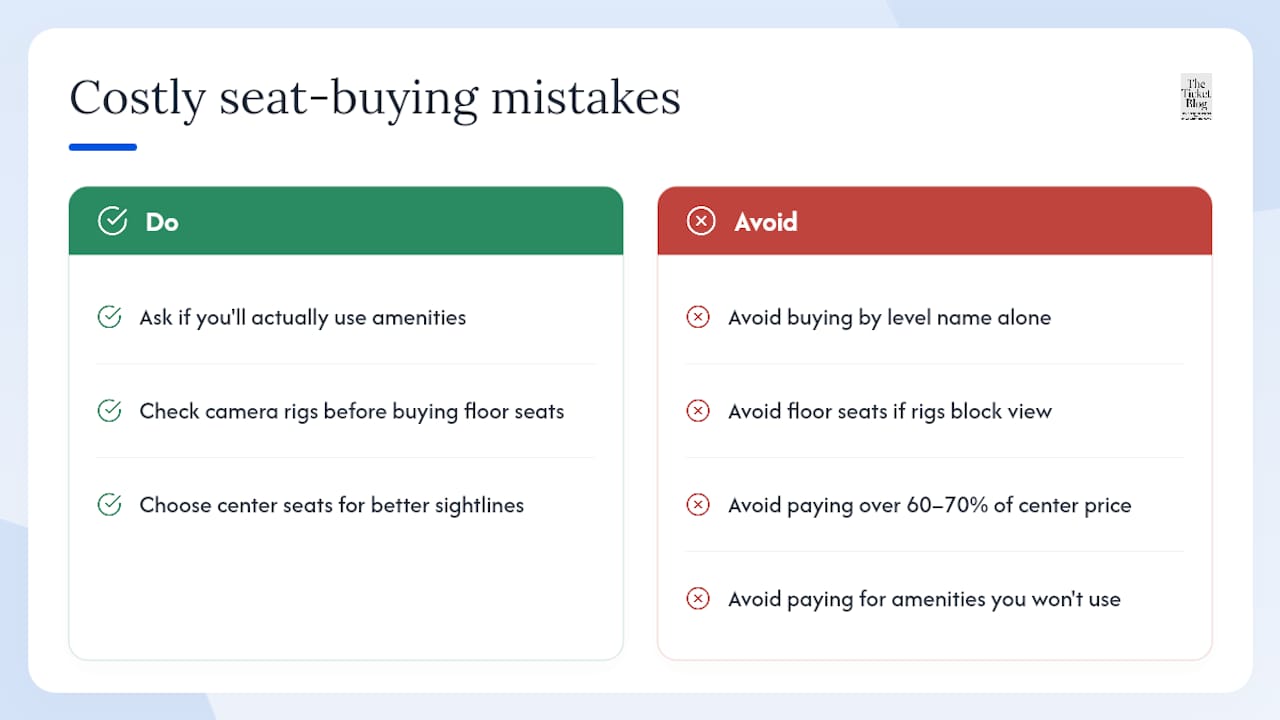
The most common error is buying by level name alone. “Lower bowl” sounds better than “upper level,” but a lower-bowl corner seat at Row 30 gives you a worse view of the game than a 200-level center seat at Row 3. Level labels are marketing shorthand, not sightline guarantees.
Paying for floor seats at fights or concerts without checking camera rig placement is a close second. Rows 1–5 at ringside or stage-front are often blocked by production equipment, and you spend the event looking at the back of a camera operator. Survey data shows that affordability ranks highest among what fans value (63%), with seat quality second (47%), which means fans are already making trade-offs. The mistake is making the wrong trade-off by paying more for a seat that delivers less.
Choosing corners because they are “cheaper” without checking the angle is another predictable trap. A corner seat is cheap for a reason: the angle is bad. If you are going to accept a compromised view, at least price it accordingly and do not pay more than 60–70% of what a center seat in the same tier costs.
Overvaluing amenities is the subtler version of the same problem. Club access and padded seats are worth paying for if you arrive early, eat at the venue, and stay through the final whistle. If you show up at tip-off and leave at halftime, you are paying for a lounge you never used. Understanding how sports fan packages are priced helps you separate the amenities that match your habits from the ones that just inflate the ticket price.
Pro Tip: Before buying any seat with a premium amenity attached, ask yourself: “Will I actually use this?” If the honest answer is no, strip the amenity and redirect that money toward a better row in the section you actually want.
Key Takeaways
Mid-tier center and infield front rows deliver the best seats per dollar at sports venues because sightline quality, not raw proximity, determines how much of the game you actually see.
Point | Details |
Mid-tier center wins | Front rows of 200-level or mezzanine infield sections consistently outperform lower-bowl corners on sightline quality per dollar. |
Row beats level label | The best row in a cheaper tier usually gives a better view than the worst row in a pricier tier. |
Sport-specific adjustments | Upper-midfield for football, mezzanine infield for baseball, 200-level center for basketball and hockey, mid-tier lower-bowl for concerts and fights. |
Buy smarter, not earlier | Set section alerts, use promo codes, and check for last-minute resale drops 48–72 hours before the event. |
The Ticket Blog | The Ticket Blog’s venue-specific seat guides, promo codes, and buying tips help fans apply these rules to real ticket listings across major U.S. venues. |
The case for mid-tier center seats is stronger than most fans realize
The conventional wisdom in sports ticketing is that lower means better. Pay more, sit closer, have a better time. That logic holds at the extremes: a front-row courtside seat at MSG is genuinely better than a 200-level seat. But the vast middle of the market, where most fans actually buy tickets, does not work that way.
The real value gap is between center and corner, not between lower bowl and upper level. A lower-bowl corner seat at a football game gives you a worse view of the play than an upper-midfield seat at a fraction of the price. The same is true in hockey, where a low-corner seat cuts off the far goal, and in basketball, where behind-basket rows at any level sacrifice the full-court view for proximity to one end.
What The Ticket Blog consistently finds is that fans who apply the row-over-level heuristic, buying the best row in a mid-tier center section rather than a back row in a pricier tier, come away more satisfied with their experience and their spend. The seat-view photo check takes 30 seconds and eliminates most bad purchases before they happen. The promo code search takes another two minutes. Together, those two habits close most of the gap between what fans pay and what they actually get.
How The Ticket Blog helps you find the best seat for your money
The Ticket Blog gives you the specific, venue-proven guidance that turns the rules above into real ticket purchases. Instead of browsing a seating chart alone, you get curated seat recommendations by venue and sport, promo codes that apply directly to the sections worth buying, and timing alerts that flag when your target rows drop in price.
Every guide on The Ticket Blog is built around the same principle: the best seat is the one that gives you the most game for your money, not the one with the fanciest label. Whether you are buying for a regular-season Islanders game at UBS Arena or a playoff run at MSG, the site’s venue-specific guides walk you through exactly which sections to target, which rows to prioritize, and which promo codes are active for that event.
Visit The Ticket Blog to browse seat guides, grab current promo codes, and set up price alerts for your target sections before your next game.
Useful sources
The recommendations in this guide draw on the following sources. Each one adds a specific layer of evidence to the rules and venue examples above.
The future of the ‘cheap seats’ — why teams are rethinking upper decks | SportsBusiness Journal
Acrisure Stadium Pittsburgh Steelers guide | GamedayGuides
Sports venues prioritize luxury seating as premium spaces drive revenue | RealGM Wiretap
Fans are hungry for new seating options at sports venues | Gensler
NYC sports seating guide — best seats at MSG, Yankee Stadium, Citi Field, Barclays & MetLife | Stage & Street NYC
UBS Arena hockey seating guide — best seats for Islanders games | Stage & Street NYC
Best seats at T-Mobile Arena in 2026 | LasVegasWonders
Seating chart — Columbus Arena
From underutilized to oversold: How sports venues are turning ‘cheap seats’ into fan favorites | Athletic Business
Check each venue’s official seating chart and seat-view photos before you buy. The rules above tell you where to look; the photos confirm whether a specific row delivers.
Recommended

Comments