Arizona Cardinals History and Traditions From 1898 to 2026

The Arizona Cardinals can claim something no other NFL team can: their story reaches back to 1898. Before Super Bowls, television contracts, indoor stadiums, and fantasy football, this franchise was a neighborhood team on Chicago’s South Side. More than a century later, it plays in the desert, wears one of the league’s oldest names, and carries a history full of title seasons, painful near-misses, loyal fans, and unforgettable players.
That long life is what makes the Cardinals fascinating. The team has moved cities, changed eras, and survived lean stretches that would have swallowed less stubborn clubs. Yet the identity remains easy to spot: red jerseys, a cardinal on the helmet, the “Bird Gang,” and a fan base that has learned to celebrate both history and hope.

The franchise began in Chicago and became an NFL original
The Cardinals trace their roots to the Morgan Athletic Club, founded in Chicago in 1898. The team later became known as the Racine Cardinals, not because of Racine, Wisconsin, but because it played on Racine Avenue in Chicago. The “Cardinals” name came from faded maroon jerseys reportedly purchased from the University of Chicago. Team owner Chris O’Brien described the color as “cardinal red,” and one of football’s longest-running names stuck.
When the American Professional Football Association formed in 1920, the Cardinals joined as a charter member. The league changed its name to the National Football League in 1922, and the Cardinals became one of the few franchises with a direct link to the NFL’s earliest days. For a broader timeline, the team’s own official history page is a useful place to start.
The first great milestone came in 1925, when the Chicago Cardinals were awarded the NFL championship. That title remains one of the most debated in league history because of the Pottsville Maroons controversy. Pottsville had a strong claim on the field, but the NFL suspended the club after an unauthorized exhibition game in Philadelphia. The Cardinals received the championship, and the debate has followed the record book ever since.
The Cardinals’ cleaner championship moment came in 1947. Led by the famous “Million Dollar Backfield,” which included Charley Trippi, Paul Christman, Pat Harder, and Elmer Angsman, Chicago beat the Philadelphia Eagles 28-21 at Comiskey Park. Angsman broke long touchdown runs, and the Cardinals won what remains the franchise’s most recent NFL championship.
A year later, the Cardinals returned to the title game but lost to the Eagles in a snowstorm, 7-0. That 1948 game marked the end of the franchise’s early golden age. The next several decades would be defined by relocation, great individual players, and long waits for playoff success.
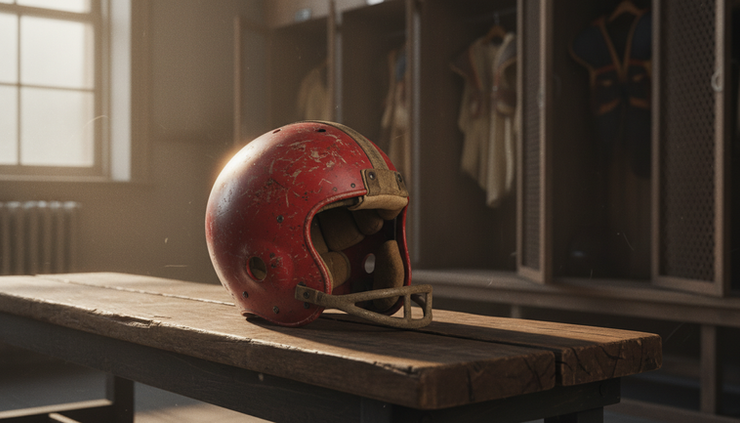
Moves to St. Louis and Arizona reshaped the Cardinals
The Cardinals left Chicago after the 1959 season and moved to St. Louis in 1960. The relocation made sense in part because Chicago already belonged emotionally to the Bears. In St. Louis, the Cardinals found a new home and a new generation of fans.
The St. Louis Cardinals never reached a Super Bowl, but they produced major names. Safety Larry Wilson became one of the greatest defensive backs in NFL history and helped define the safety blitz. Tight end Jackie Smith gave the franchise one of its first true receiving stars at the position. Quarterback Jim Hart became a steady leader, while offensive lineman Dan Dierdorf built a Hall of Fame career in the trenches.
The 1970s brought some of the best football St. Louis ever saw. Under head coach Don Coryell, the Cardinals became known for a strong offense and back-to-back NFC East titles in 1974 and 1975. That era also featured running back Terry Metcalf, wide receiver Mel Gray, and a style that helped point the NFL toward a more open passing game.
Still, postseason wins remained hard to find. The team’s playoff drought grew, stadium issues lingered, and ownership looked west. In 1988, the franchise moved to Arizona and played as the Phoenix Cardinals. In 1994, the name changed to the Arizona Cardinals, giving the club a statewide identity.
The move did not bring instant success. Sun Devil Stadium in Tempe was not built for an NFL franchise, and the Cardinals often played in extreme heat early in the season. Yet Arizona slowly built its own football culture. Fans who had followed the team from St. Louis mixed with new supporters in Phoenix, Tucson, and across the Southwest.
One breakthrough arrived after the 1998 season. Behind quarterback Jake Plummer, running back Adrian Murrell, wide receiver Frank Sanders, and cornerback Aeneas Williams, the Cardinals made the playoffs and stunned the Dallas Cowboys in the Wild Card round. It was the franchise’s first playoff win since 1947. For long-time fans, that win felt bigger than a single postseason result. It proved the Arizona era could have its own moment.
Reliable season-by-season records are available through Pro Football Reference’s Cardinals page and the Pro Football Archives franchise index.
The Glendale era brought the Cardinals’ biggest modern moments
The franchise changed again in 2006 when the Cardinals opened their retractable-roof stadium in Glendale, now known as State Farm Stadium. The new building gave the team a true NFL home and helped create one of its signature fan spaces: the Great Lawn, where tailgating became part of the game-day rhythm.
The stadium era quickly delivered the greatest run in modern Cardinals history. The 2008 team, led by head coach Ken Whisenhunt, quarterback Kurt Warner, wide receiver Larry Fitzgerald, wide receiver Anquan Boldin, and safety Adrian Wilson, won the NFC West. Then it caught fire in January.
The Cardinals beat the Atlanta Falcons, Carolina Panthers, and Philadelphia Eagles to win the NFC. Fitzgerald’s postseason was electric. Warner played with the calm of a former Super Bowl MVP. The franchise reached Super Bowl XLIII against the Pittsburgh Steelers.
The game became an instant classic. Fitzgerald’s late touchdown gave Arizona a 23-20 lead, and for a few minutes the Cardinals stood on the edge of their first Super Bowl win. Pittsburgh answered with Ben Roethlisberger’s throw to Santonio Holmes in the corner of the end zone, and the Steelers won 27-23. The loss hurt, but the run changed how many people viewed the Cardinals. They were no longer just an old franchise with a thin modern record. They had stood on football’s biggest stage.
The very next postseason produced another iconic game. In January 2010, Arizona beat the Green Bay Packers 51-45 in overtime in one of the highest-scoring playoff games in NFL history. Karlos Dansby ended it with a fumble return touchdown after a sack and strip by Michael Adams. Warner threw more touchdowns than incompletions, a rare and remarkable line.

The Bruce Arians years brought another peak. In 2015, the Cardinals went 13-3 with Carson Palmer at quarterback, Fitzgerald still leading, and a strong defense that included Patrick Peterson, Calais Campbell, Tyrann Mathieu, and others. The divisional playoff win over Green Bay became known for one play above all: “Hail Larry.” Palmer escaped pressure and found Fitzgerald for a 75-yard catch-and-run in overtime, then hit him again for the winning touchdown.
Arizona lost the NFC Championship Game to Carolina, but the 2015 season remains one of the finest in team history.
The next chapter brought quarterback Kyler Murray, chosen No. 1 overall in the 2019 NFL Draft. Murray’s speed and arm talent gave the offense a new shape. The 2021 team opened 7-0 and returned to the playoffs, though it lost in the Wild Card round to the Rams. By 2023 and 2024, the franchise was rebuilding around a new leadership group, with general manager Monti Ossenfort and head coach Jonathan Gannon. Draft picks such as Paris Johnson Jr. and Marvin Harrison Jr. signaled a focus on young cornerstone talent as the team worked toward the 2025 and 2026 seasons.
Through 2026, the Cardinals’ modern identity rests on that mix: old roots, desert football, and the belief that another January run can come fast when the right pieces meet.
Great players and traditions keep the Cardinals’ identity alive
The Cardinals’ history is not a simple climb. It is a long line of eras, each with a few players who gave fans a reason to believe.
Some names belong in any serious franchise conversation:
Ernie Nevers A two-way star from the early NFL and one of the sport’s first legends.
Charley Trippi A do-everything back who helped deliver the 1947 championship.
Larry Wilson A Hall of Fame safety whose toughness became part of the franchise’s defensive DNA.
Dan Dierdorf A dominant offensive tackle and one of the key figures of the St. Louis years.
Aeneas Williams A shutdown corner and later safety who gave Arizona a true defensive star in the 1990s.
Pat Tillman A beloved safety who left the NFL to serve in the U.S. Army after September 11. His legacy remains central to Cardinals history and is carried on through the Pat Tillman Foundation.
Kurt Warner The veteran quarterback who led Arizona to the Super Bowl.
Larry Fitzgerald The defining Cardinal of the Arizona era, admired for elite production, hands, leadership, and loyalty.
Patrick Peterson, Calais Campbell, Adrian Wilson, Budda Baker, and Kyler Murray Modern standouts who shaped the team across defense, offense, and leadership.
Fans can explore official honors through the Cardinals’ Ring of Honor information and player biographies through the Pro Football Hall of Fame.
The traditions matter just as much as the names.
The fan base often calls itself the Bird Gang, a phrase tied to pride, noise, and loyalty through good seasons and rough ones. The stadium crowd is known as the Red Sea, especially when State Farm Stadium fills with red jerseys for home games. The team’s mascot, Big Red, has been part of the family-friendly side of Cardinals football for years.
Tailgating on the Great Lawn is another core ritual. The open space outside the stadium gives game day a desert feel, especially during late-afternoon kickoffs when the sun drops and fans gather hours before kickoff. The roof and field tray at State Farm Stadium add their own quirks. The natural grass field rolls in and out of the building, a detail that still catches the attention of new fans.
Rivalries have shifted with geography. The Chicago Bears are tied to the franchise’s oldest history. The Cowboys became a major opponent during the NFC East years and through the 1998 playoff upset. Today, the core rivalries come from the NFC West: the San Francisco 49ers, Los Angeles Rams, and Seattle Seahawks. Those games often shape the Cardinals’ season more than any others.
For fan voices, news, and community discussion, sites such as Revenge of the Birds and the Cardinals hub at NFL.com offer useful reading alongside official team resources.

Why the Cardinals’ long story still matters
Few teams ask fans to hold as much history at once as the Cardinals do. The franchise belongs to Chicago’s early pro football roots, St. Louis’s proud football memories, and Arizona’s desert-era identity. It carries a debated 1925 title, a clear 1947 championship, decades of frustration, a stunning Super Bowl run, and a modern future still being written.
That is the appeal of the Cardinals. Their history is not neat, but it is rich. Long-time supporters can point to Larry Wilson, Aeneas Williams, Pat Tillman, Larry Fitzgerald, and the night “Hail Larry” shook the stadium. New fans can start with the current roster, then trace the line backward to Warner, Trippi, Nevers, and a Chicago club wearing faded cardinal-red jerseys.
The Cardinals’ next great chapter may come in 2026 or beyond. Whenever it arrives, it will not stand alone. It will join one of the oldest, strangest, most resilient stories in American football.


Comments